Publications
Geometry-Adaptive Explainer accepted to NeurIPS 2026
Our work on faithful dictionary-based interpretability under distribution shift was accepted to NeurIPS 2026.
Ph.D. Student, Yonsei University
Statistics and Data Science
Hello! I am Sungjun Lim, a PhD student at Yonsei University's Statistics and Data Science department.
My goal is to build trustworthy AI that makes reliable decisions under uncertainty. I pursue this through probabilistic learning, reliable and efficient inference, and the study of model behavior.
Three research questions toward trustworthy AI.
Learn useful distributions over models, representations, and solutions, using uncertainty to improve prediction and generalization.
Representative paper Flat Posterior Does Matter For Bayesian Model Averaging (FP-BMA) Representative paper Uncertainty-driven Embedding ConvolutionGenerate and compare candidate solutions, and decide when further computation is worthwhile.
Representative paper Train for Many, Update with One (FBI) Representative paper When to Stop and Which to Return (Trajectory-MBR)Develop explanations faithful to internal model behavior and learn behavior aligned with human preferences.
Representative paper Geometry-Adaptive Explainer (GAE) Representative paper Semi-Supervised Preference Optimization with Limited Feedback (SSPO)Across these questions, I care about robustness to changing conditions and the efficient use of data and computation.
Our work on faithful dictionary-based interpretability under distribution shift was accepted to NeurIPS 2026.
The workshop will be held at ICML 2026 in Seoul, South Korea.
Our work on uncertainty-aware embedding ensembles was accepted to the ICLR 2026.
The paper was accepted to ICLR 2026 as an oral presentation.
Our paper on flat posterior behavior in Bayesian model averaging was accepted to UAI 2025.
No news matches these filters.
University of Seoul
MLAI Lab, University of Seoul
University of Seoul
Advisor: Kyungwoo Song
Yonsei University
Statistics and Data Science
Advisor: Kyungwoo Song
All publicationsGoogle Scholar
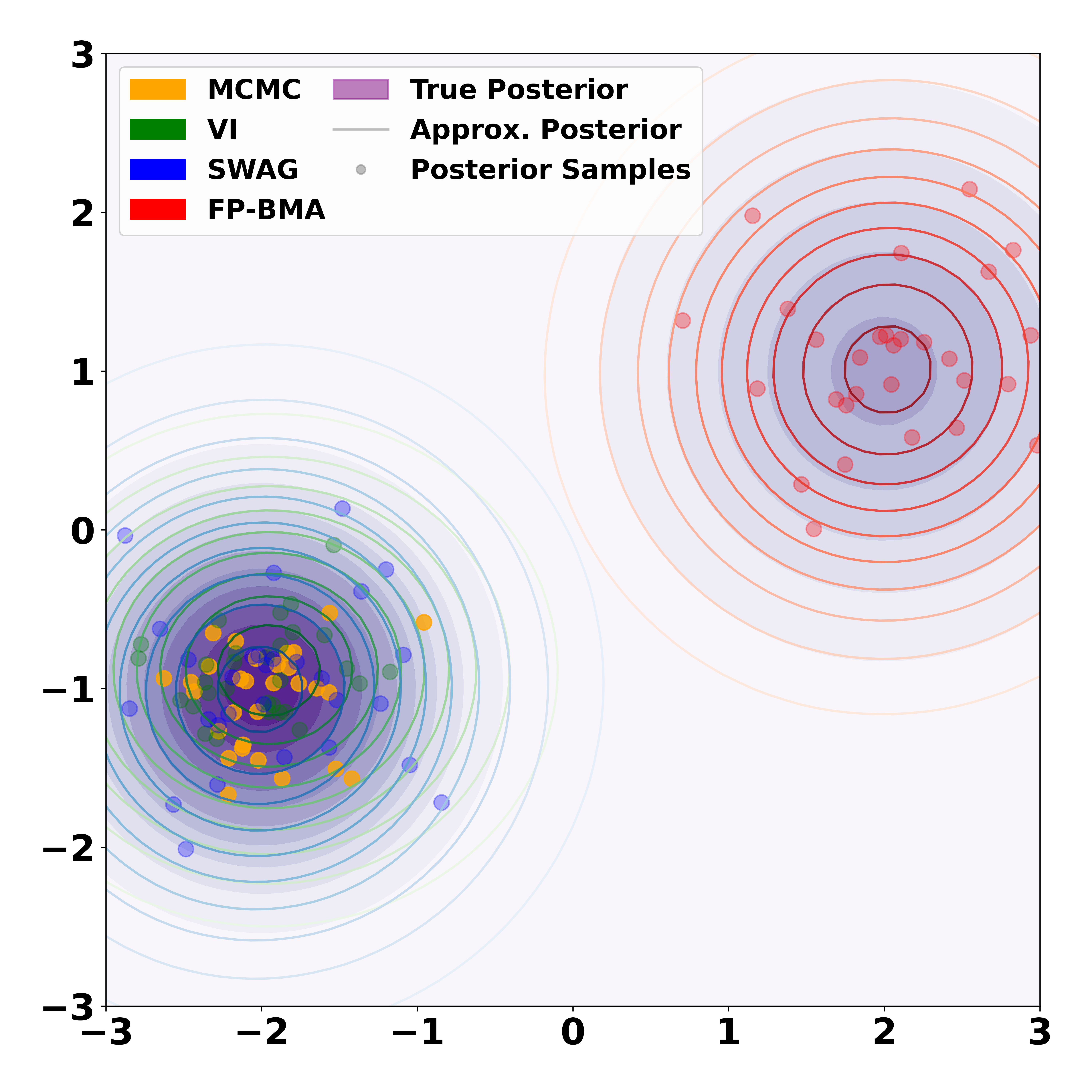
We train Bayesian neural networks to favor flat posteriors, improving generalization in model averaging and transfer learning.
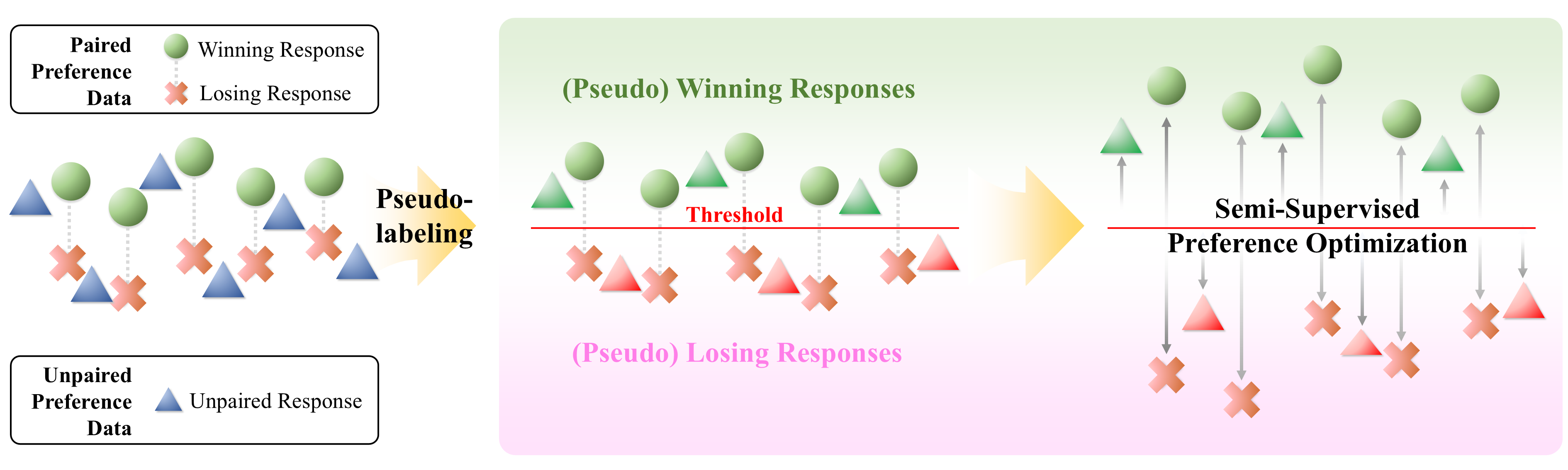
We align language models with fewer preference labels by learning from paired feedback and pseudo-labeled unpaired responses.
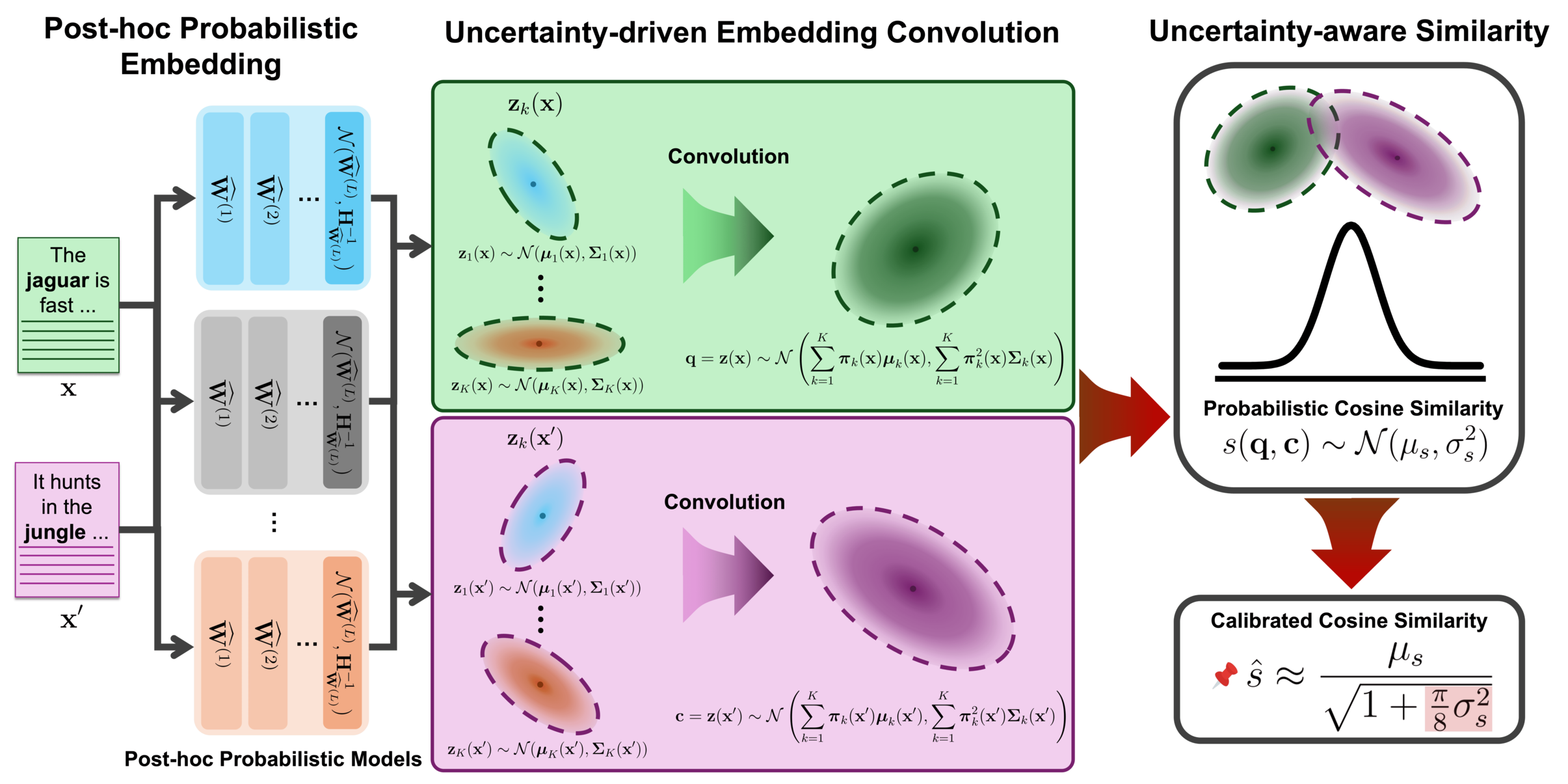
We combine embedding models using their uncertainty to improve retrieval and classification across tasks and languages.
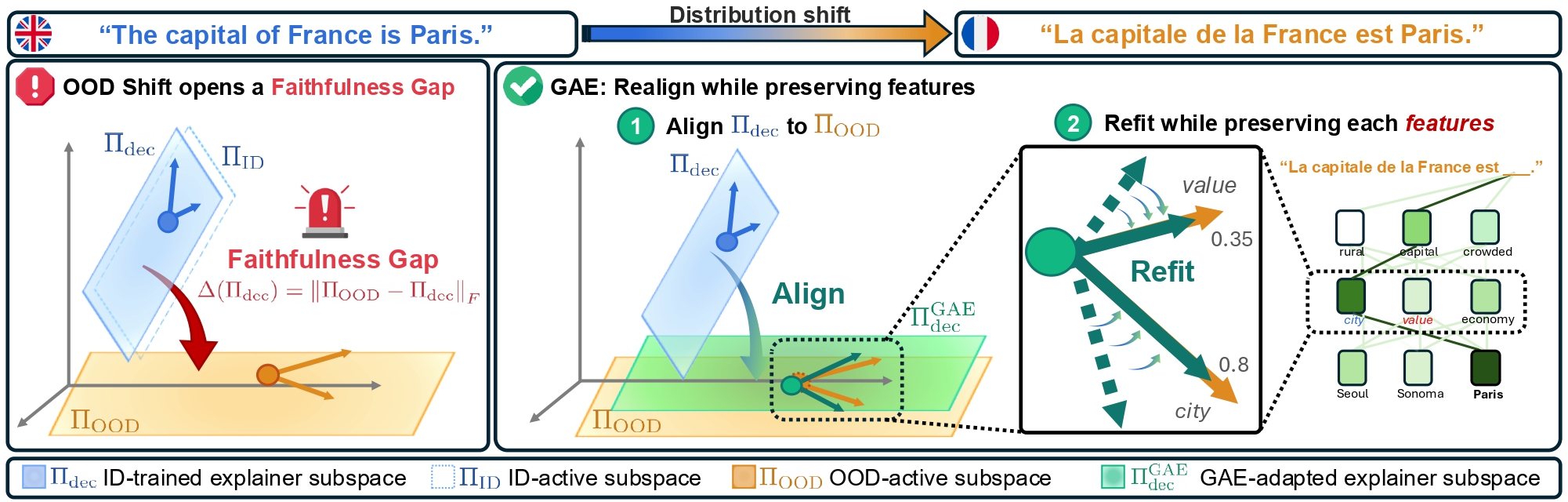
We realign explainer dictionaries to shifted activation geometry, restoring faithful explanations without gradient updates.
No peer-reviewed publications match the selected filters.